


- Accueil >
- Recherche et innovation
La recherche et l’innovation à l’Institut Curie
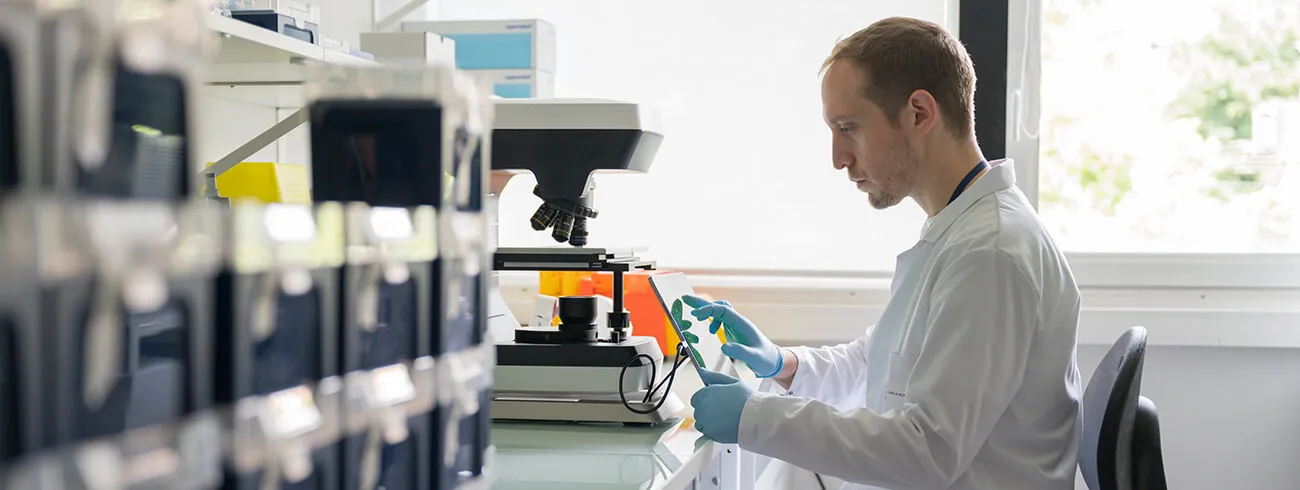

A l’Institut Curie, la recherche fondamentale, translationnelle et clinique s’articule dans un continuum recherche-soins qui permet d’accélérer l’innovation au bénéfice des patients.
Socle du modèle Curie, ce cercle vertueux de la connaissance et de l’excellence médico-scientifique est également source de transfert et d’utilisation de nouvelles technologies pour l’innovation médicale.

Le Centre de recherche
Le Centre de recherche de l'Institut Curie rassemble 1 200 collaborateurs, 13 unités mixtes de recherche, 86 équipes et 19 plateformes technologiques, afin d’améliorer les connaissances en matière de sciences du vivant et de faire avancer la lutte contre le cancer.
 Unités de recherche
 Equipes de recherche
 Plateformes technologiques
L'innovation thérapeutique
La recherche clinique vise à évaluer, dans un cadre strictement contrôlé, l’efficacité, la tolérance et l’innocuité, chez l’homme, des innovations diagnostiques et thérapeutiques issues des laboratoires de recherche. A l'Institut Curie, plus de 2 000 patients bénéficient chaque année de traitements innovants en participant à un essai clinique.
Accélérer l'innovation en connectant tous les acteurs

Transfert de technologie
Le transfert de technologie à l'Institut Curie transforme les inventions issues de ses chercheurs, médecins et soignants en applications concrètes et impactantes au bénéfice de la société et des patients.

Données
Diagnostics précoces, nouvelles pistes de traitement… Les données ont vocation à être un vecteur d’accélération de la recherche et de l’innovation, à tous les stades de la prise en charge du patient.
Rejoindre le Centre de recherche de l'Institut Curie
Professionnels de la recherche, rejoignez une structure reconnue internationalement pour l’excellence de sa recherche fondamentale et les innombrables progrès qui en découlent en matière de lutte contre le cancer.

- 50€
- 100€
- 150€
- 500€
- Montant libre
Après réduction fiscale, votre don vous revient à 51.00€